The Crust Multi-Regolith Refinery Setup — Rates, Rows & the Roundabout
Published 2026-09-207 min read
The Crust multi regolith refinery setup explained: base production rates, row layouts, the roundabout pattern, and how many refineries one elevator can feed.
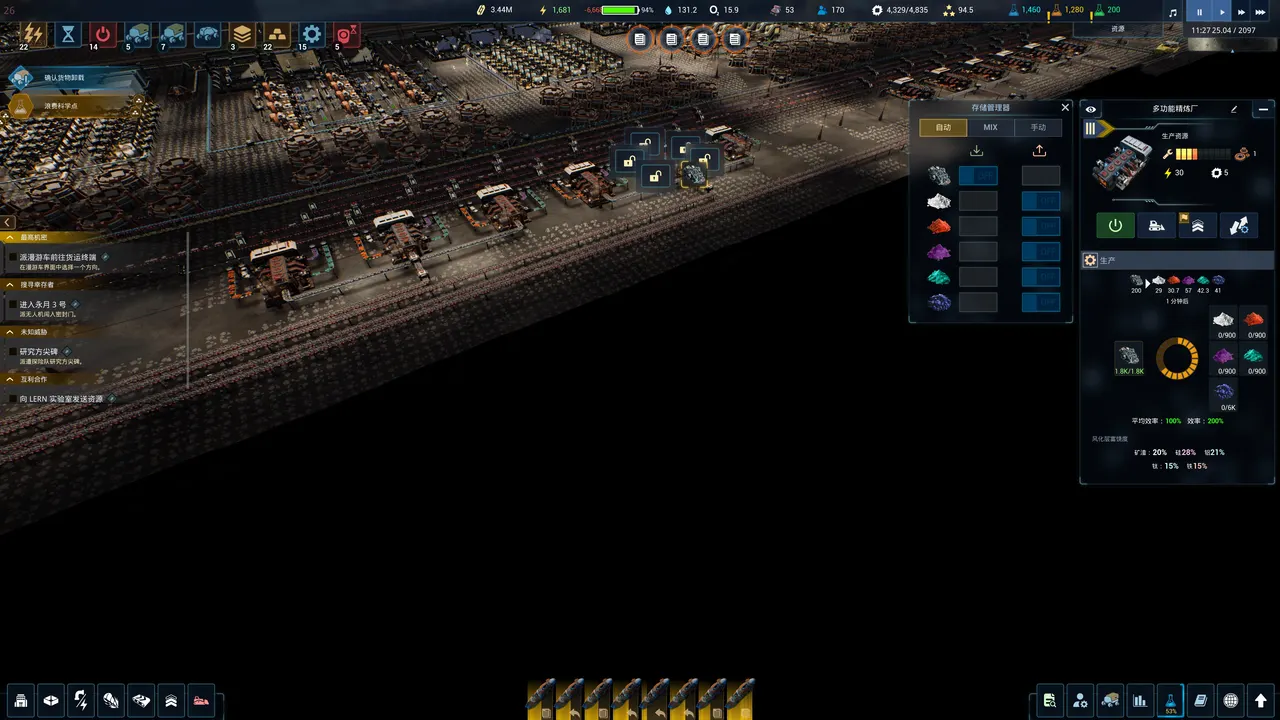
The Multi-Regolith Refinery (MRR) is the machine your whole economy hangs on: it crushes raw regolith and chemically separates all oxide types at once — titanium, iron, silicon and aluminum oxide — with slag as the byproduct. One MRR replaces a street of single-regolith refineries, which is why every serious layout conversation on the forums ends up being about how to arrange and feed them.
What one refinery actually produces
The community wiki documents base production (data verified at version 0.99.55; treat exact numbers as patch-sensitive):
| Regolith input | Output per minute (base) |
|---|---|
| 60/min | 12 titanium oxide + 12 iron oxide + 12 silicon oxide + 12 aluminum oxide + 12 slag |
Upgrades raise the input rate (the wiki notes Upgrade I ≈ 80/min, and flags that Mk.2 output numbers look bugged — "in-game upgrade descriptions may be misleading"). Community reports echo that speeds vary: a popular 贴吧 guide measured around 200/min per refinery on their save and warned that even within one version, primary refinery speeds differed save-to-save. The safe rule: read the machine's own throughput panel in your save and balance around that.
Two operational notes from the wiki entry that matter for layout:
- The MRR stops entirely if any single output slot fills — one backed-up oxide starves the whole machine. Keep every output consuming or storing at production rate.
- It draws 5 CPU and 30 power, so rows of them are a real CPU-budget decision, not just a floor-space one.
How many refineries can your elevator feed?
The 贴吧 guide's elevator math, cross-checked against the wiki's 60/min baseline:
- A conveyor elevator moves 4 belts, up to 4 × 600/min combined.
- At community-observed high rates (~200/min per MRR), one elevator ≈ 12 refineries: one 600/min red belt backs about three MRRs, so four red belts back twelve.
- At the wiki's conservative 60/min baseline the machines are input-hungry rather than output-blocked — your bottleneck moves to regolith supply, which is why the roundabout guide recommends adding input capacity as you upgrade.
Either way the conclusion is the same: don't hang more refineries off one elevator than its four belts can cycle.
The roundabout setup
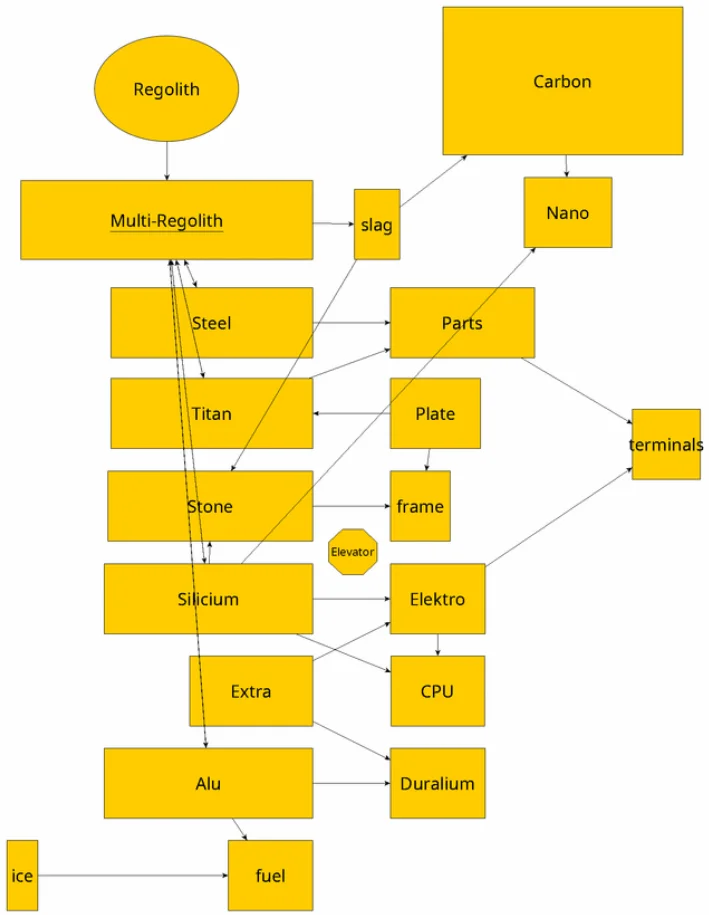
The best-documented arrangement is the Steam guide "Roundabout Multi-Regolith Refinery setup": refineries sit inside a closed belt ring; entering regolith merges with priority given to traffic already circulating (three chevrons toward the direction of travel on every outer splitter); oxides leave via configured off-ramps (set each to its oxide, upgrade to T2 so it doesn't slow the ring); slag exits whichever side you route. The author's verdict: it's flexible because oxides "can be pulled from the outer belt in any direction," so downstream layout can change freely.
Row setups from working bases
- Four per side, regolith up the middle. The "Storage and Layout" Steam guide runs 4 MRRs on each side of a central regolith feed; all oxides get sorted at the top-middle, where silicon oxide and slag divert into smart concrete production on the way to storage.
- Long shared rows. The forum's classic "Mass Multi Regolith Refinery" thread collects split-side rows (input belt on the right, slag processing down the left, smelting across the top, new refineries extending downward) and flipped-building pairs that share one feed belt.
- Mind the outputs. Because any full output slot halts the machine, rows either drain into a balanced main bus or into bulk storage that never stops accepting.
For the splitter priority settings the roundabout depends on, see the programmable splitter guide; for what to do with all that slag, the slag guide covers its second life as concrete and carbon.